If a tree falls
in a forest and no one is around to hear it, does it make a sound?
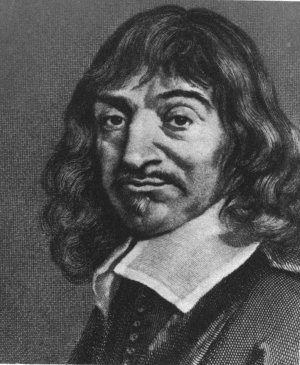 |
| (Forever Alone Descartes) |
While reading Company, I began to notice the narrator
narrating a narration – “Devised deviser devising it all for company. In the
same figment dark as his figments” (Selected
Works, Vol. IV 443). It seemed as if the narrator had some sort of
affirmation to make to himself. To affirm his existence he had to narrate, or
project even, in order to feel some sort of belonging or company; or merely to avoid what I believe we humans fear most –
being alone, as we “devise it all for company.” This pattern reminded me of
Descartes famous “Cogito.” If I think therefore I am, then my thoughts serve as
the projected perception of reality. But if my thoughts are solely what
determine my existence, something human is lost. I am alone. The narrator in
the story seems to be affirming his existence, like one would use the “Cogito,”
however, he is only affirming his existence to himself. The narrator becomes
aware of himself devising plots, characters, reliving memories, and then
criticizes himself for doing so, “Yet another still devising it all for company”
(449).
 |
| (This is a Tree. Falling Alone.) |
Even
though the narrator catches himself in the act of “devising it all for company,”
he still ends up precisely where he began: Alone. And until some outside force
encounters the narrator, he will always remain that way. I think that this may
be Beckett critiquing Descartes’s “Cogito.” If I think, therefore I am
determines existence, then the I will
always be alone in that existence. Like the narrator trapped inside his own
mind, proving his own existence to himself, the person using the “Cogito” will
only do the same and inevitably each time end up alone, until someone else comes
along to prove otherwise. And is that not the Hell Sartre tells us of? We can
only exist through other people. But do you see the beauty in that?
Anyway, I’ll revamp that life-long, unanswered riddle:
Anyway, I’ll revamp that life-long, unanswered riddle:
If a child is
born in a world and no one is around to see it, does it live a life?*
*Author's Note:
Even if that child were to be seen by other people, even interact with them, the child must still suffer the fact that even though it may not be alone in the world, he or she or it will still always be alone inside (s)he/its own mind, or imagination. Trapped inside our own conscious thought, we are condemned there forever until death, where we finally reach the epitome of loneliness, or maybe more optimistically, an epitome of company as we all for the final time come alone, together.
Anyway, here's Squidward Tentacles' attempt at facing the ultimate alone, and I feel as if his reaction is one that belongs to us all.

I found "Company" to be one of my favorite readings so far as it confronts the subject we all deal with which you pegged in this post. The reference Descartes was a bonus. In contemplating "Company" I had not made that connection, especially the part about Beckett critiquing Descartes. I definitely think your on to something there. That could be a post all its own. I am going to have to investigate this further. Definitely thought provoking.
ReplyDelete